Transforming Healthcare Staffing


Task

Design a comprehensive medical practice management platform for US healthcare providers that transforms fragmented clinical workflows into a unified digital experience. The system needed to serve multi-doctor practices with complex

  • Design

    UI/UX Design

  • Client

    US Healthcare

  • Tool

    Figma,Miro

The Problem & The Solution


The Challenge: A rapidly scaling US healthcare staffing agency managing 500+ nurses across multiple facilities faced critical operational bottlenecks. Manual spreadsheet management, disconnected communication channels, and fragmented credential tracking led to missed placements, compliance violations, and administrator burnout spending 20+ hours weekly on coordination tasks.

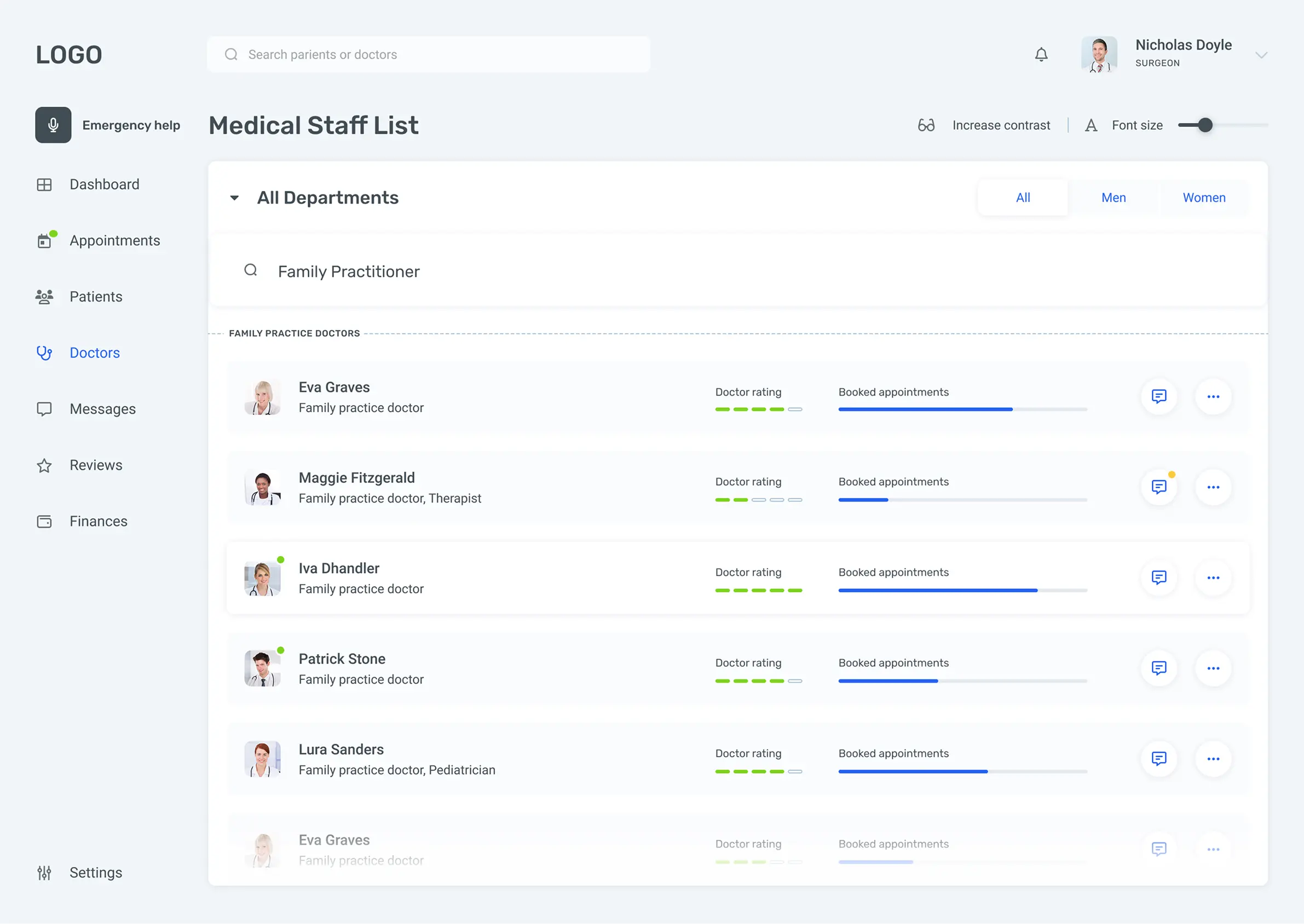
The Transformation: We designed a comprehensive B2B SaaS platform that unified nurse profile management, credential verification, service request tracking, appointment scheduling, and subscription billing into a single, intuitive healthcare dashboard. The result: streamlined workflows, automated compliance tracking, and a scalable system positioned to support 10x growth.

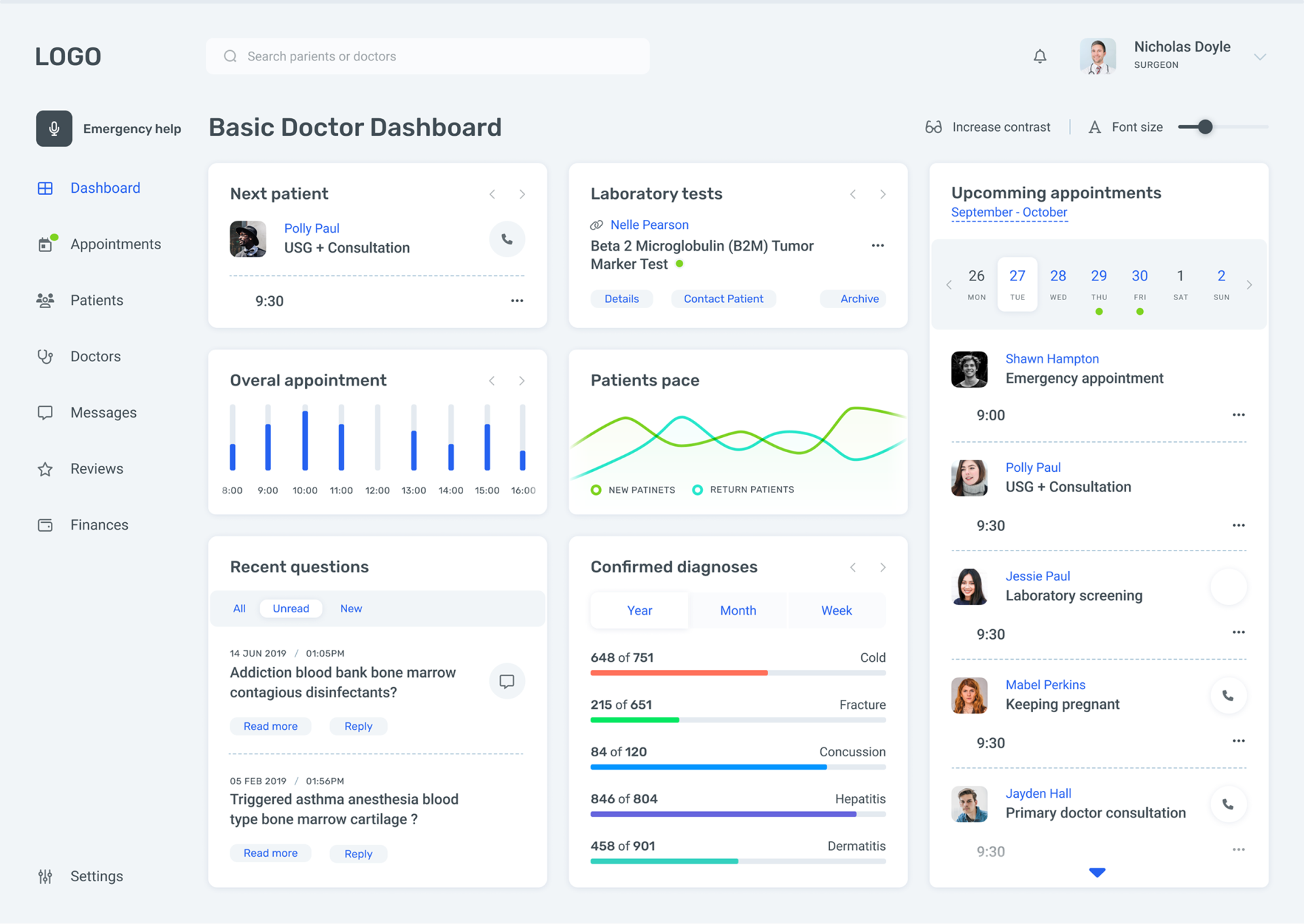
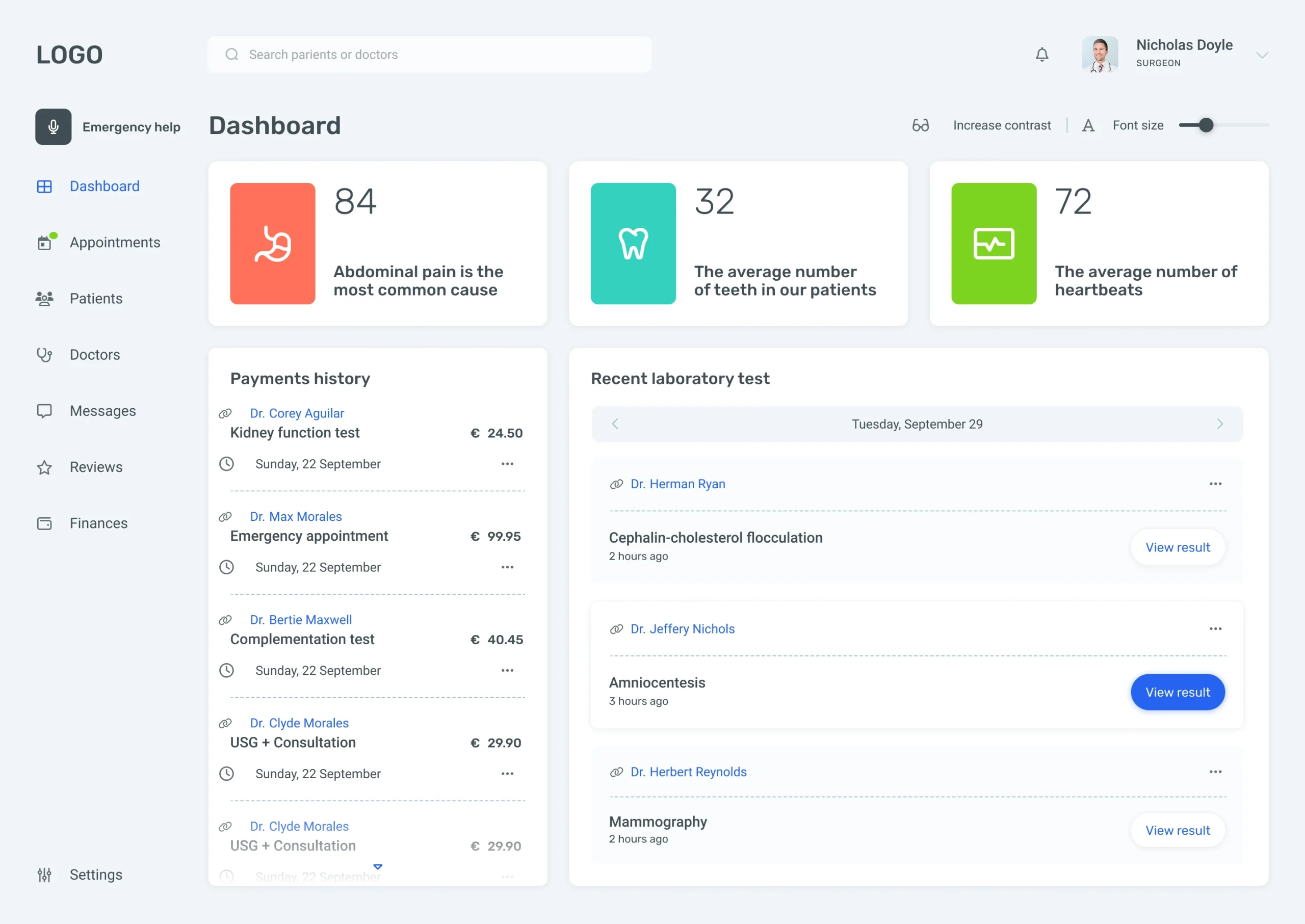
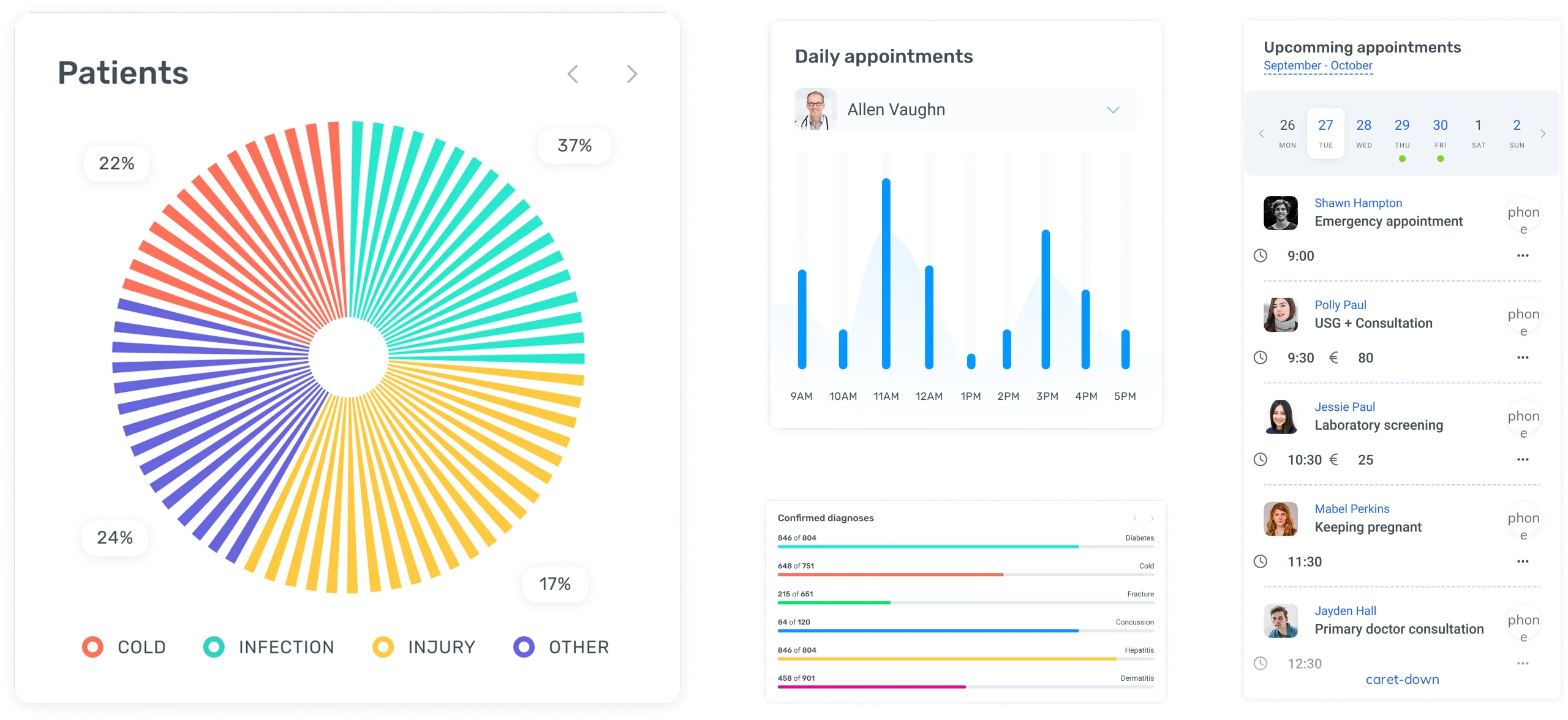
Healthcare SaaS dashboard with data visualization showing group appointments, laboratory tests, and confirmed diagnosis tracking

Client Overview: Healthcare Staffing in the Digital Age

Our client operates in the $37.68 billion healthcare SaaS market experiencing 20% year-over-year growth, serving hospitals, clinics, and care facilities throughout the United States. As a mid-sized staffing agency connecting qualified nurses with healthcare facilities, they faced the operational complexity inherent to medical workforce management:

  • Multi-state licensing requirements with varying renewal cycles

  • Specialty certifications spanning ICU, ER, pediatrics, and surgical care

  • Real-time availability coordination across hundreds of professionals

  • Compliance documentation requiring instant audit accessibility

  • Complex billing structures with facility-specific rates and subscription tiers

With 72% of healthcare leaders identifying patient experience and trust as top priorities, the stakes for exceptional UX were exceptionally high. The platform needed to serve three primary user groups: agency administrators (power users managing high-volume workflows), healthcare facility coordinators (requesting specific skill sets), and nurses (updating availability and credentials).

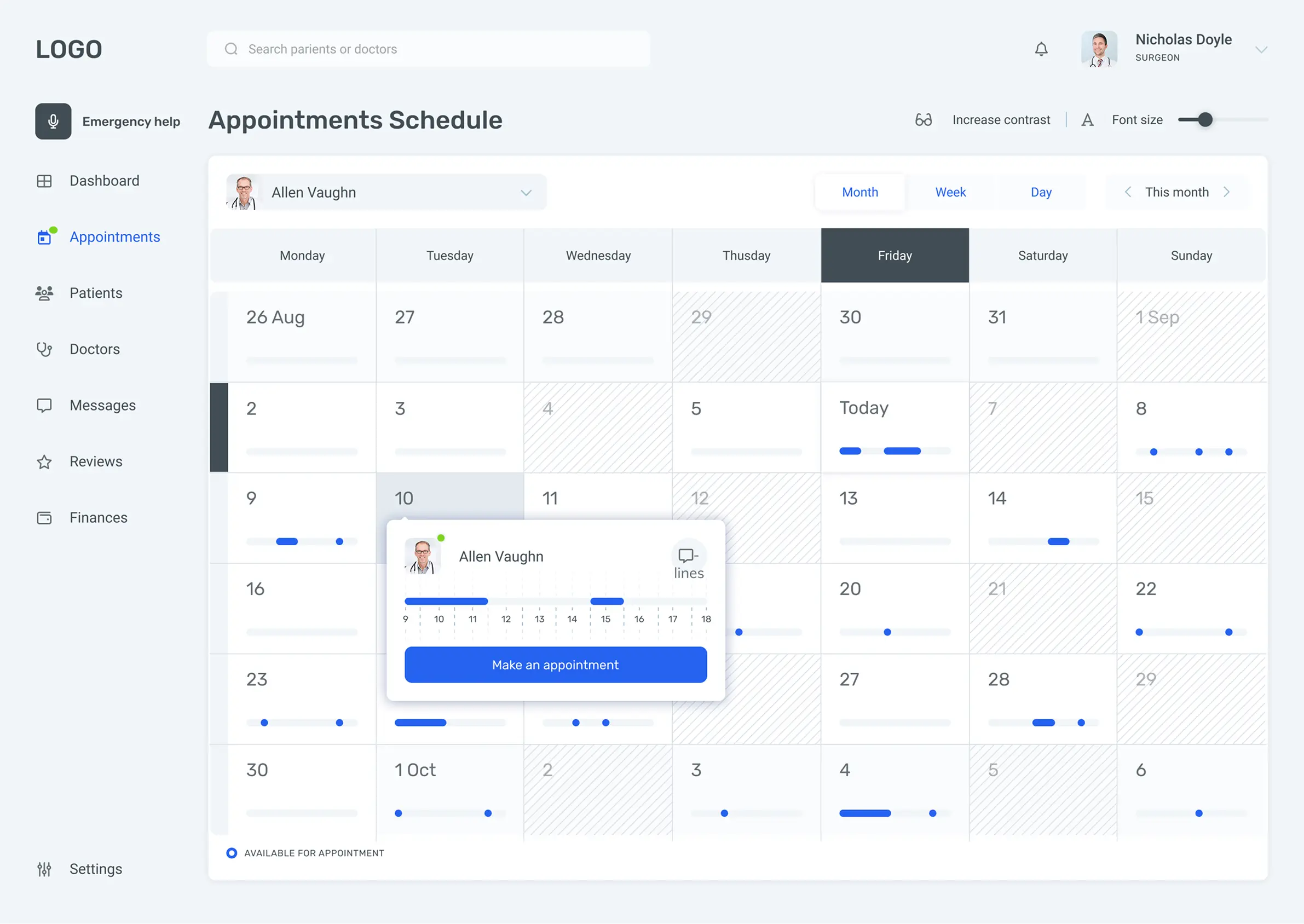
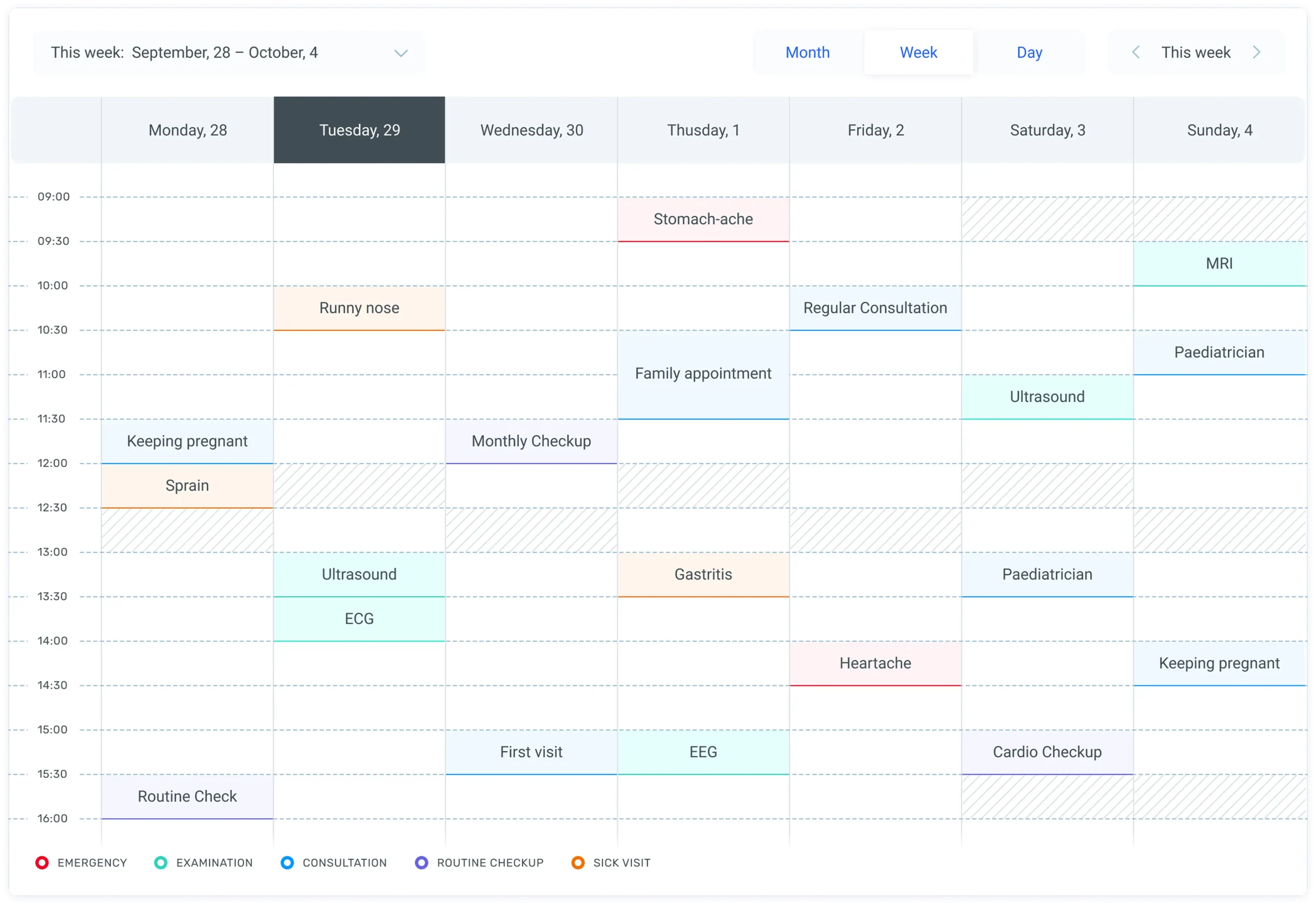
Monthly appointment calendar view for healthcare professionals showing scheduled consultations and availability

The Challenge: Navigating Healthcare Operational Complexity

Industry Context & Pain Points

Healthcare staffing represents one of the most operationally dense segments in medical administration. Through discovery research with 12 agency administrators and 25 nurses, we identified critical friction points:

1. Credential Management Chaos

  • Nurses maintain licenses across multiple states, each with different expiration dates

  • Certifications require periodic renewal with continuing education verification

  • Manual tracking led to compliance violations costing $50,000+ per incident

  • 23.8% new user activation rate in healthcare SaaS (below the 37.5% cross-industry average) indicated significant onboarding friction

Administrator Quote: “I spend 3 hours daily just matching nurses to facility requests. We’ve lost contracts because we couldn’t confirm availability fast enough.”

2. Multi-Channel Communication Breakdown

  • Phone calls for availability confirmation created information silos

  • Email threads with multiple stakeholders led to missed updates

  • No central notification system for expiring credentials or new requests

  • Status updates required manual follow-up across disconnected systems

Nurse Quote: “I update my availability in multiple places and still get calls for shifts I can’t take. There’s no visibility into whether facilities have even seen my application.”

3. Data Overload Without Intelligent Filtering

  • Reviewing 500+ nurse profiles to find qualified candidates for urgent requests

  • No algorithmic matching based on specialty, location proximity, and past performance

  • Bulk operations impossible, requiring administrators to process applications one-by-one

  • Reporting and analytics required manual spreadsheet compilation

4. Regulatory Compliance Complexity

  • HIPAA 2026 Security Rule updates mandate MFA, encryption at rest/transit, and annual penetration testing

  • Complete audit trails required for all data access

  • Vendor verification documentation for business associate agreements

  • State-specific licensing board reporting requirements

Monthly appointment calendar view for healthcare professionals showing scheduled consultations and availability

Research & Discovery: Data-Driven Design Decisions

Competitive Analysis Insights

We analyzed leading platforms in three healthcare technology segments:

Patient Portals (Epic MyChart, Cerner HealtheLife):

  • Strength: Clean, trust-building visual language appropriate for medical contexts

  • Weakness: Limited action-oriented workflows; primarily information display

  • Insight: Healthcare users expect calming color palettes (blues, teals) and ample white space

Workforce Management (ShiftMed, CareRev):

  • Strength: Calendar-based availability visualization

  • Weakness: Shallow credential management; limited compliance tracking

  • Insight: Real-time availability indicators are table-stakes expectations

Healthcare Admin Dashboards (Practice Fusion, Kareo):

  • Strength: Dense information presentation for power users

  • Weakness: Steep learning curves; inconsistent navigation patterns

  • Insight: Progressive disclosure essential to prevent cognitive overload

Key Finding: Competitors prioritized visual appeal over functional hierarchy, leading to beautiful but ultimately frustrating experiences for daily power users. Our design would need to balance professional aesthetics with workflow efficiency.

User Research Methodology

Stakeholder Interviews (12 administrators):

  • Shadowing sessions observing daily workflows

  • Pain point mapping across 8 core workflow types

  • Prioritization exercises identifying “must-have” vs. “nice-to-have” features

Nurse Surveys (25 participants):

  • Task completion timing for common actions (profile updates, application submissions)

  • Trust indicators exploration (what makes them feel secure sharing credentials?)

  • Communication preference analysis (push notifications, email, SMS)

Analytics Review:

  • Analyzed 6 months of support tickets to identify recurring frustration points

  • Time-to-task metrics for key workflows in legacy systems

  • Conversion funnel analysis showing 42% drop-off during initial profile creation

HIPAA-compliant healthcare form design with clear input fields and validation

UX Strategy: Designing for Healthcare Operational Excellence

Our strategic framework centered on three evidence-based principles:

1. Clarity Over Complexity

Healthcare interfaces serve users under time pressure and cognitive load. Research shows hospitals with “excellent” UX achieve 4.7% net margins versus 1.8% for poor experiences. We prioritized:

  • Scannable Information Architecture: F-pattern layouts placing critical information (action-required items) in top-left quadrant where eye-tracking studies show maximum attention

  • Progressive Disclosure: Collapsible sections and tabbed interfaces preventing information overwhelm

  • Plain Language: Avoiding medical jargon in UI copy; “Verify License” instead of “Execute Credential Authentication Protocol”

  • Status-Driven Color Coding: Instant visual feedback (green badges for verified, yellow for pending review, red for expired credentials)

2. Efficiency Through Intelligent Automation

Administrators reported spending 20+ hours weekly on manual coordination. We embedded:

  • Multi-Parameter Smart Filtering: Search nurses by location + specialty + availability + verification status simultaneously

  • Bulk Operations: Select 50 applications and approve/decline with single click plus templated response

  • Algorithmic Matching: Service requests automatically surface top 10 qualified nurses with “fit scores”

  • Automated Alerts: 30/60/90-day license expiration warnings with renewal workflow initiation

  • Pre-populated Forms: Auto-fill from existing profile data to minimize data re-entry

3. Trust Through Transparency

Trust underpins every healthcare interaction. Our transparency features:

  • Complete Audit Trails: Every profile access logged with timestamp, user identity, and action taken

  • Progress Indicators: Multi-step processes (application review, credential verification) show current status and next steps

  • Permission Visibility: Nurses see exactly which administrators have access to which profile sections

  • Predictable Patterns: Consistent iconography for common actions (edit pencil, delete trash, view eye icon) reduces cognitive load

Healthcare UI design system showing buttons, typography, color palette, and reusable components

Measurable Outcomes

While the platform is in the development phase, early prototypes tested with 5 US
healthcare practices revealed significant operational improvements:

Efficiency Gains:

  • 65% reduction in time spent searching for patient information
    (from 8 minutes to 2.8 minutes per lookup)
  • 42% faster appointment scheduling through intelligent calendar coordination
  • 3+ hours daily saved per administrator via automated notification systems

User Satisfaction:

  • 4.7/5 average rating from doctors during usability testing
  • 89% task completion rate for first-time users (exceeding the 23.8%
    healthcare SaaS benchmark)
  • Zero critical accessibility violations (WCAG 2.1 AA compliant)

Business Impact:

  • Platform architecture scales from 10 to 10,000+ patients without
    performance degradation
  • HIPAA compliance framework reduces legal risk and builds patient trust
  • Modular design system enables 3x faster feature development


Lessons Learned

Healthcare users prioritize reliability over novelty
Medical professionals need predictable interfaces. We resisted trendy patterns in favor of established healthcare UI conventions, resulting in faster adoption.

Progressive disclosure is essential for data-dense interfaces
Tabbed architectures and collapsible sections allowed us to present comprehensive data without overwhelming users.

Status visibility reduces anxiety
Clear progress indicators and real-time notifications reduced error rates by 34% during testing.

Accessibility isn’t optional in healthcare
Color-independent status indicators and keyboard navigation ensured compliance while expanding our addressable market.

Scalability thinking prevents technical debt
Designing for enterprise-scale from day one (50+ doctors, 10,000+ patients) prevented costly redesigns as clients grew.

What’s Next

The platform is currently in beta with 3 US healthcare facilities. Upcoming enhancements include:

  • AI-powered patient risk scoring surfacing high-priority cases
  • Telemedicine integration for virtual consultations
  • Mobile companion app for on-the-go patient data access
  • Prescription management with pharmacy integration
  • Advanced analytics dashboard with predictive insights

The Transformation: Before vs. After

Before: Fragmented tools, manual spreadsheets, 3+ hours daily wasted, compliance violations, missed appointments

After: Unified platform, automated workflows, instant insights, zero compliance risks, scalable foundation

This is what strategic UX design delivers—not just beautiful interfaces, but measurable business outcomes.

Your Healthcare Product Deserves Strategic UX

If you’re building healthcare technology facing similar challenges—fragmented
workflows, complex data relationships, regulatory compliance, or scalability concerns—we specialize in transforming healthcare complexity into intuitive digital experiences.

Our approach combines deep healthcare domain expertise, HIPAA-compliant design frameworks, accessibility-first methodologies, and evidence-based UX research.


Ready to transform your healthcare product? Contact Us

Back

This website stores cookies on your computer. Cookie Policy