



Agency vs Freelancer vs In-House: The Real Cost Comparison
The sticker price is almost never the whole picture. Here’s what each option actually costs when you factor in time, quality, and risk:
| Factor | Freelancer | In-House Designer | Design Agency |
|---|---|---|---|
| Annual cost | $10K – $40K (project) | $100K – $140K (salary + benefits) | $40K – $120K (equiv. engagement) |
| Ramp-up time | Days to weeks | 2 – 4 months | 1 – 2 weeks |
| Strategic input | Execution focus | Builds over time | Day-one cross-industry depth |
| Research capability | Rare at lower tiers | Varies widely | Built into process |
| Risk | High (quality variance) | Hiring/firing risk | Contract, no long-term commitment |
| Scalability | Hard to scale | Add headcount | Scale engagement up/down |
| Best for | Small, well-defined tasks | Post-Series B, ongoing work | Pre-Series B, high-stakes projects |
The Hidden Cost Nobody Talks About: Rework
The most expensive design decision a SaaS company can make is shipping the wrong UX and rebuilding it 6 months later. Engineering time alone on a significant rework often costs $80,000–$200,000+ when you factor in backend changes, QA, and lost velocity. A $25,000 design engagement that gets it right the first time is not a cost — it’s a hedge.
How to Know If a Design Agency Quote Is Fair
Getting a proposal is easy. Knowing whether it’s reasonable is harder. Here’s what to look for, and what should raise a red flag.
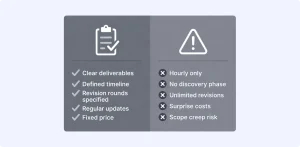
A Fair Quote Will Include:
- A clearly scoped deliverables list, not just ‘design services’
- A defined number of revision rounds per milestone
- A named timeline with milestone dates
- A breakdown of what each phase covers (discovery, wireframes, UI, handoff)
- A clear process for scope change requests (change orders, not vague ‘we’ll figure it out’)
Red Flags in a Proposal:
- Hourly rate only, with no scope definition → impossible to budget
- No discovery phase for a complex product → they’re guessing at the problem
- No usability testing included → design is untested before handoff
- Unlimited revisions as a selling point → no process, endless cycles
- A quote without asking about your users → not actually doing UX
How to Get the Most ROI from Your Design Investment
Design is a high-leverage investment, when it’s done right. Here’s how to make sure you’re in the group that gets a measurable return, not the group that wonders what they paid for:
1. Define success metrics before the engagement starts
The best design engagements start with a clear definition of what improvement looks like. Is it trial-to-paid conversion? Support ticket reduction? Time-to-activate for new users? Setting a measurable baseline before day one means you can actually calculate the ROI after launch.
2. Don’t cut research to save money
It seems counterintuitive, but removing the research phase to reduce cost is almost always the most expensive decision you’ll make. Research is what stops a team from designing confidently wrong. The $3,000 you save cutting user interviews can easily cost $40,000 in engineering rework when the design turns out to solve the wrong problem.
3. Involve your engineering team from week one
The biggest hidden cost in design engagements isn’t the design, it’s the gap between design and development. When engineers aren’t involved until handoff, they discover edge cases, technical constraints, and state complexity that requires redesign. Front-load that conversation and your implementation goes faster and cheaper.
4. Ask for a design system, not just screens
If you’re spending $35,000+ on a redesign, make sure you’re getting a design system, not just a Figma file of finished screens. A design system means every future feature your team builds stays consistent, without coming back to the agency for every new screen. It’s the difference between a one-time project and a scalable design foundation.
Frequently Asked Questions
Can I negotiate a design agency’s price?
Yes, but negotiate scope, not the hourly rate. Agencies price based on estimated hours. If you reduce scope (fewer platforms, fewer user types, no research phase), the price comes down. Asking for a lower rate on the same scope usually results in cutting corners you won’t find out about until post-launch.
Is it cheaper to hire a freelancer than an agency?
The upfront cost is lower. The total cost often isn’t. Freelancers rarely include strategy, research, design systems, or developer handoff in their scope. What you don’t pay for upfront, you often pay for in rework, engineering back-and-forth, and design inconsistency at scale.
How do I know if my SaaS product actually needs a redesign?
If any of these apply, the answer is almost certainly yes: trial-to-paid conversion is below 15%, support keeps answering the same UX questions, new features go unused, or your UI looks different depending on when a feature was built. A UX audit ($3,000–$8,000) will give you a prioritized diagnosis before you commit to a full redesign.
Do you work with early-stage startups?
Yes. Pre-seed, seed, and Series A. Budget varies — we’ve worked on $10,000 sprints and $60,000 engagements. If your problem is real and your product direction is solid, we can find a scope that works. The right time to invest in UX is before you’ve built too much of the wrong thing.

What TheDan.design Charges, and What You Get
We’re a product design agency focused on B2B SaaS, fintech, and healthcare. We believe in pricing transparency because clients who understand what they’re paying for make better partners.
| Engagement | Starting Price | What’s Included |
|---|---|---|
| UX Audit | From $5,000 | Heuristic evaluation · Competitor UX benchmarking · 60-min findings walkthrough · Prioritized fix list |
| MVP Design | From $15,000 | Discovery workshop · User flows · Wireframes · High-fidelity UI · Interactive prototype · Dev-ready Figma |
| Full Redesign | From $35,000 | Everything in MVP + UX research · Usability testing · Design system · Design QA through development |
| Design System | From $50,000 | Token architecture · Component library · Figma documentation · Contribution guidelines |
| Monthly Retainer | From $3,500/mo | Ongoing design support · Weekly sync · Priority turnaround |
We send proposals within 48 hours and every scope is defined line by line, no surprises, no hidden change-order triggers. Your first call is free, and we’ll tell you honestly if another engagement type would serve you better.
Get a Custom Quote in 48 HoursTell us about your product, timeline, and budget. We’ll scope it precisely and send a proposal you can actually evaluate. Book a Free 30-Minute Strategy Call → No commitment · No sales pressure · Proposal sent within 48 hours |
The Bottom Line
UI/UX design pricing isn’t mysterious; it’s scoped. A $5,000 UX audit and a $75,000 redesign are both fair prices when you understand exactly what’s included in each. The mistake most SaaS teams make isn’t overpaying; it’s underbriefing. A vague scope produces vague quotes, which produce vague outcomes.
Know what you need. Define your success metrics upfront. Ask for a deliverables list, not just an hourly rate. And choose a design partner who asks about your users before they start designing for them.
If you’re still unsure what your product actually needs, a UX audit is the fastest way to find out. We’ll identify every friction point costing you conversions and hand you a prioritized fix list — whether you work with us afterwards or not.
| KEY TAKEAWAYS FROM THIS POST |
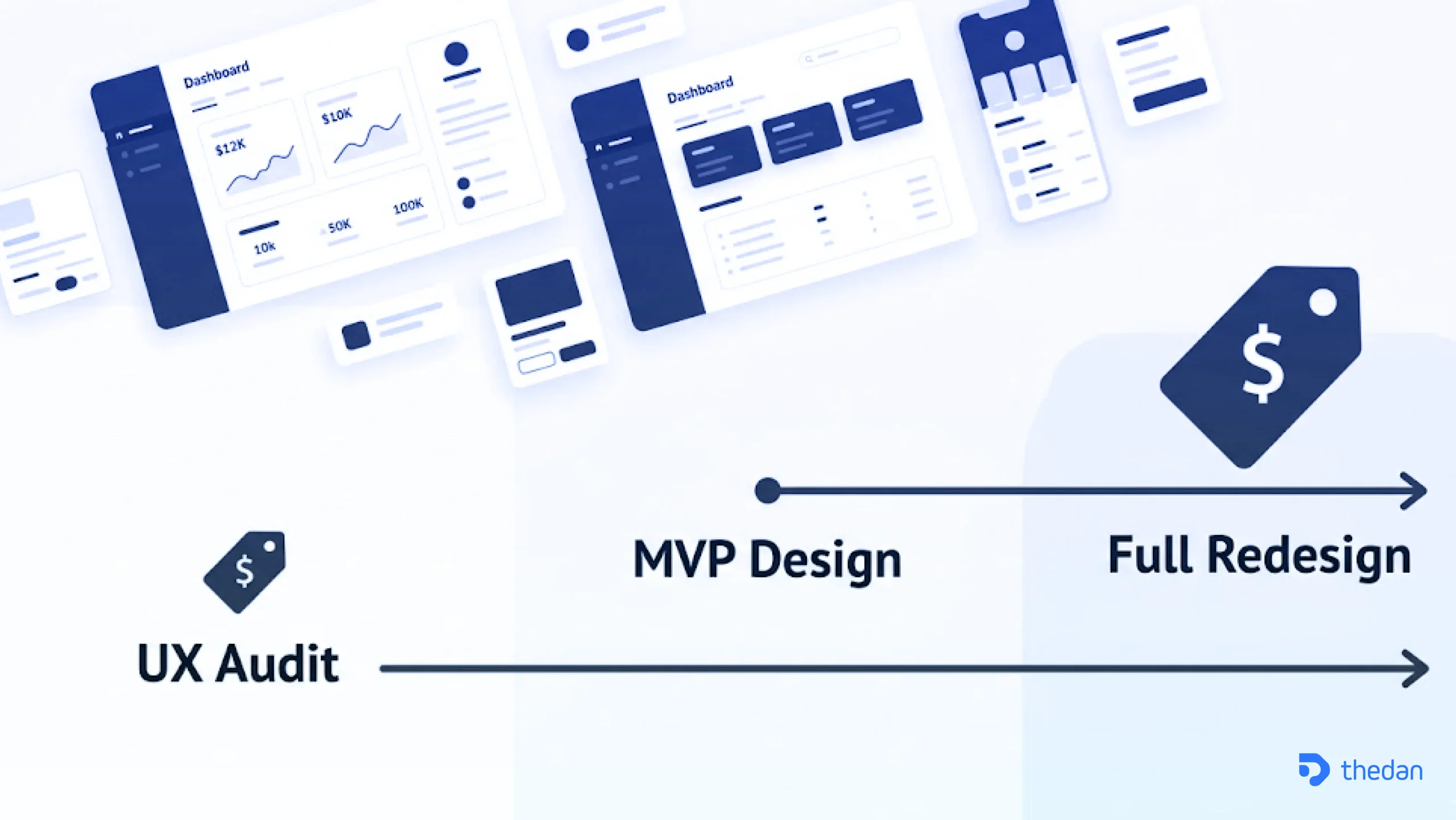
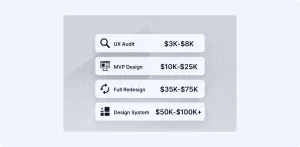
| UX audits cost $3K–$8K · MVPs $10K–$25K · Full redesigns $35K–$75K |
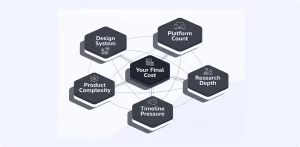
| Complexity, research, platforms, and timeline are the main cost drivers |
| Agencies cost more upfront but typically deliver better ROI than freelancers for high-stakes work |
| A good proposal includes clear deliverables, milestone dates, and defined revision rounds |
| The most expensive UX decision you can make is shipping the wrong design and rebuilding it |